
Cargo Insurance: Your Safety Net Against the Unexpected Risks of International Shipping

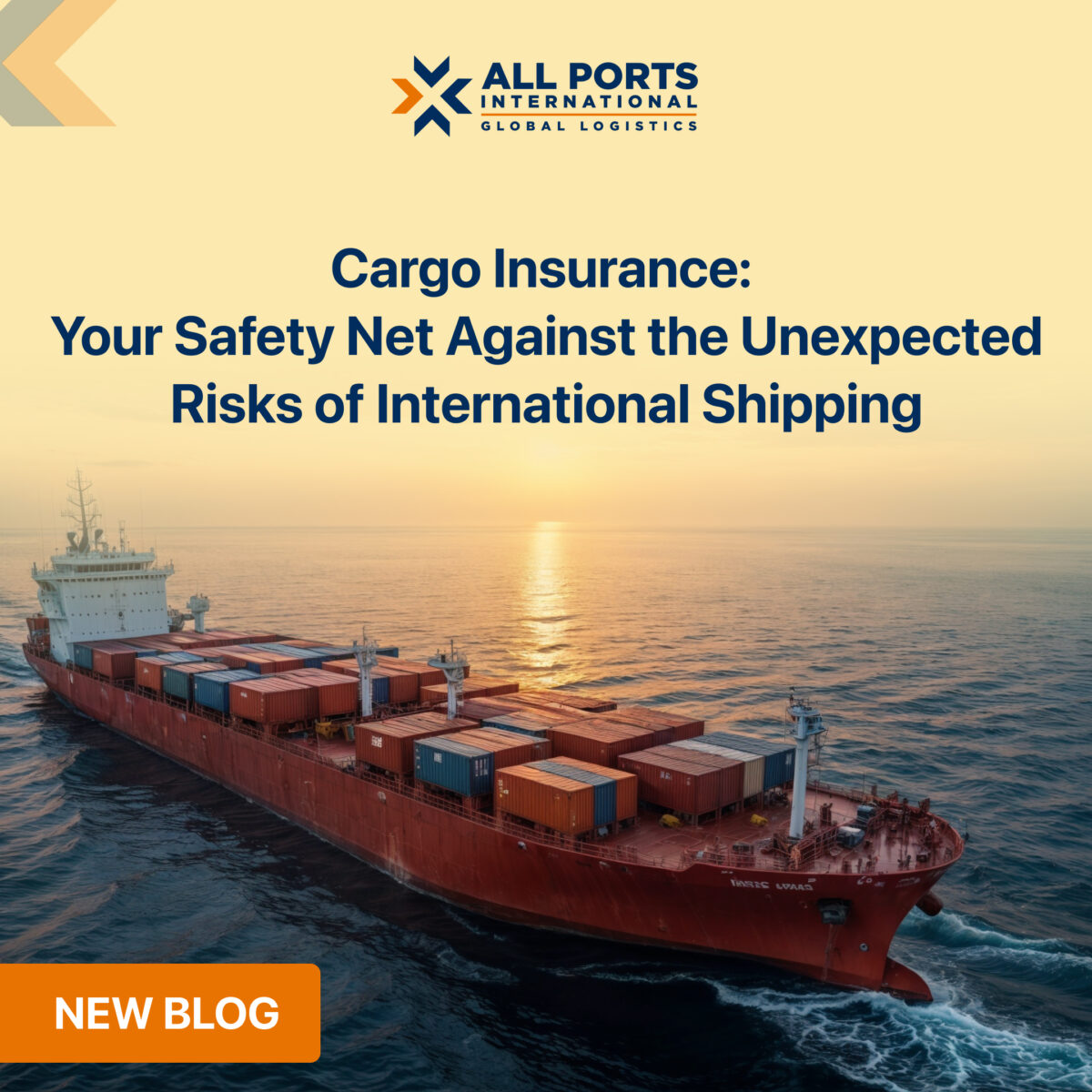

In the complex world of International Logistics, many importers overlook one of the most critical aspects of risk management: comprehensive cargo insurance. The assumption is often, "The carrier is liable, so my goods are covered." This is a common and potentially devastating mistake.
Relying solely on a carrier's legal liability is not enough to protect your financial investment. At All Ports International, we highlight this often-overlooked area to ensure you have a complete safety net, preventing potential losses.

Carrier’s Legal Liability is the baseline level of accountability that carriers adhere to for goods in their care, custody, and control. It is not insurance and comes with two severe limitations:
- Limited Compensation: Compensation is often capped at a low maximum amount per package or per kilogram of cargo, not the full commercial value of your goods. For ocean carriers, this limit is often as low as $500 per customary shipping unit. If your container holds $100,000 worth of electronics, a $500 reimbursement doesn't even cover the freight cost.
- Burden of Proof: To claim, you must prove that the carrier's negligence caused the loss. Carrier liability does not cover losses due to events outside of their control, such as natural disasters, acts of war, or even a sudden "act of God".
Cargo Insurance, by contrast, provides a broader, more comprehensive safety net that protects the actual value of the goods, regardless of who is at fault.

The two most common types of cargo insurance coverage determine the level of protection you receive:
| Coverage Type | Description | What It Covers | Who Should Use It |
| Named Perils (Institute Cargo Clauses B or C) | Less Comprehensive. Only covers losses specifically listed in the policy. | Typically covers perils of the sea, like sinking, fire, collision, total loss, or stranding. | Often used for low-value or bulk cargo. |
| All-Risk (Institute Cargo Clauses A) | Most Comprehensive. Provides the broadest protection, covering all causes of loss or damage unless specifically excluded in the policy. | Covers fire, theft, water damage, handling errors, natural disasters, and more. | Highly recommended for high-value or finished goods. |
A critical, often-insured risk is General Average. If a disaster occurs and cargo must be voluntarily sacrificed to save the ship and remaining cargo, all cargo owners must contribute to the loss. Cargo insurance will cover this contribution, securing the release of your goods.

The cost of your cargo insurance premium is determined by a thorough risk assessment. The key factors include:
- Value and Nature of Cargo: High-value, fragile, or perishable goods (like electronics or pharmaceuticals) attract higher premiums due to increased risk of theft, damage, or spoilage.
- Mode and Route: Sea freight is generally considered the riskiest mode. Routes passing through piracy-prone waters or areas with political instability will incur higher premiums.
- Claim History: A history of frequent claims will generally lead to higher rates.
- Level of Coverage: Opting for the comprehensive "All-Risk" coverage will naturally cost more than a limited "Total Loss Only" policy.

Navigating the various coverage options, policy terms, and cost factors can be overwhelming. This is where the expertise of All Ports International shines. Our dedicated long term staff ensures you don't just secure coverage—you secure the right coverage. We provide the essential guidance needed to protect your financial interests, guaranteeing peace of mind from the point of origin to the final destination.

Don't let the unexpected be the costliest part of your business. Let our team assess your specific cargo risks and tailor a policy that fully protects your investment.
Contact All Ports International today to discuss your cargo insurance needs.
- Category: Uncategorised