Short-Term Storage, Long-Term Peace of Mind: Streamlining Winter Inventory

At All Ports International Logistics, we fully understand how vital it is for your business to run seamlessly, regardless of the season. As the winter months deepen throughout July, many Australian businesses encounter a common, frustrating bottleneck: inventory fluctuations.

Whether you are navigating delayed mid-year shipments, stocking up early for the second-half peak season, or managing unexpected shifts in product demand, space quickly becomes a premium. When your own warehouse begins to overflow, it creates operational problems that disrupt your day-to-day efficiency.

That is where a flexible Third-Party Logistics (3PL) warehousing strategy becomes your secret weapon.

The Winter Inventory Bottleneck: Why Space Matters Now

July is a transitional month in the logistics calendar. Businesses are wrapping up end-of-financial-year audits while simultaneously trying to forecast stock levels for the busier months ahead. Managing this influx of goods presents several challenges:

  • Overcrowded Warehouses: Excess inventory restricts movement, slows down pick-and-pack times, and increases the risk of stock damage.
  • Rigid Overhead Costs: Committing to long-term commercial warehouse leases just to handle a temporary or seasonal surge in stock is financially inefficient.
  • Inflexible Supply Chains: Without buffer storage, you lose the ability to capitalise on bulk purchasing opportunities or accept early supplier shipments.

The All Ports 3PL Solution

What sets All Ports International apart is our commitment to acting as an active partner in your business. We provide comprehensive, flexible 3PL warehousing and distribution services tailored precisely to your short-term or long-term requirements.

By utilising our warehousing, you can scale your storage needs up or down seamlessly as your inventory fluctuates. From receiving full container loads (FCL) to managing palleted stock, we take complete control of the physical burden so your warehouse can breathe again.

Total Transparency With All Ports International

Outsourcing your warehousing should never mean losing visibility. The moment your cargo enters our 3PL system, our electronic tracking module ensures you have total control and transparency over your stock levels.

More importantly, your inventory is managed by our dedicated, long-term staff. We don't just rely on automated systems; our team brings real friendliness, clear communication, impeccable customer service to every pallet we handle. We treat your cargo with the exact same care and attention to detail that we give to our international freight forwarding and customs brokerage operations.

Ready to clear the clutter and optimise your supply chain this winter? Contact the team at All Ports International today to find out how we can give your business room to grow.

Understanding Customs Valuation and Duty Drawbacks: Are You Overpaying?

At All Ports International Logistics, we believe that true customer service goes beyond moving cargo from point A to point B. It’s about acting as an active partner in your business and protecting your bottom line. As we enter the new financial year this July, there is no better time to audit your operational expenses—starting with your customs duties.

For Australian commercial importers, navigating the complexities of customs valuation can be a minefield. Unintentional classification errors or a lack of awareness around duty relief programs mean that many businesses are quietly overpaying on their import costs.

The Complexities of Customs Valuation: Getting It Right

Customs duty isn’t just a random tax; it is a precisely calculated percentage based on the Customs Value (CV) of your goods. Determining this value correctly requires deep regulatory knowledge, as simple oversights can lead to inflated costs or costly compliance problems.

Key areas where businesses frequently overpay or run into compliance issues include:

  • Incorrect HTS Classification: Misclassifying your goods under the Harmonised Tariff Schedule can cause you to pay a significantly higher duty rate than required.
  • Inclusion of Non-Dutiable Costs: International freight, inland transport overseas, and certain buying commissions should often be excluded from the customs value, yet they are frequently bundled in by inexperienced hands.
  • Missed Free Trade Agreements (FTAs): Australia has numerous bilateral and multilateral FTAs that allow for duty-free or reduced-rate entry, provided the strict rules of origin and paperwork are perfectly executed.

Maximising Your Returns with Duty Drawbacks

If your business imports goods into Australia and subsequently exports them to overseas markets, you could be eligible for a Duty Drawback.

The Duty Drawback scheme enables untaxed or duty-paid imported goods to receive a refund on the customs duty paid upon their initial arrival, provided they are exported within specified timeframes. Whether the goods are exported in their original condition or transformed into new products, matching these complex claim requirements can unlock significant working capital for your business.

Expert Professionalism with a Personal Touch

Unlocking these hidden savings requires more than automated software; it requires a dedicated team with technical expertise. Our licensed, in-house customs brokerage team brings decades of experience to your supply chain, ensuring absolute compliance while aggressively identifying legal avenues for duty minimisation.

Backed by our friendly, long term staff, we handle the meticulous documentation required for customs clearances and drawback claims so you don’t have to. We take complete control of your customs bottlenecks, delivering customer service that keeps your financial interests front and centre.

Are you certain you aren't overpaying on your import duties this financial year? Contact our expert customs brokerage team at All Ports International today to schedule a comprehensive customs valuation review.

Navigating Peak Season Surcharges: How to Budget for H2 Global Freight

At All Ports International Logistics, we fully understand how vital it is for your cargoes to arrive on time and in good condition. As we step into the second half of the year, Australian businesses must prepare for one of the most financially challenging periods in the shipping calendar: the arrival of Peak Season Surcharges (PSS).

From July onwards, global shipping lanes experience a significant surge in volume as international retailers ramp up inventory for the end-of-year rush. For Australian importers and exporters, this spike in demand inevitably brings added complexities and increased costs that can heavily impact your bottom line if not managed proactively.

Understanding the Hidden Costs of the H2 Shipping Rush

Peak Season Surcharges are additional fees imposed by shipping lines to handle the operational strain of peak periods. Navigating these surcharges requires a clear understanding of why they occur and how they impact your commercial cargo:

  • Capacity Constraints: As vessel space becomes premium, carriers introduce surcharges to manage supply and demand.
  • Equipment Shifting: The cost of repositioning empty containers to high-demand ports overseas is frequently passed down to businesses.
  • Unpredictable Fluctuations: Surcharges can change with minimal notice, creating sudden budgeting problems for unsuspecting businesses.

How an Active Partner Mitigates Surcharge Impacts

What sets All Ports International apart is our commitment to being an active partner in your business. We don't believe you should simply absorb these rising costs. Our experienced professionalism allows us to analyse alternative strategies to protect your cargo and minimise your freight costs.

By leveraging our strategic global alliances and a network of over 200 worldwide agents spanning five continents, we work hard to secure competitive space allocations. Whether that means adjusting your shipping schedules slightly to avoid peak cutoff dates or routing cargo through alternative transhipment ports, we tailor solutions to keep your supply chain cost-effective.

Impeccable Service in a Volatile Market

Managing freight costs during a surcharge period requires absolute transparency and close communication. Our electronic tracking module is activated the moment we receive your order, providing status updates within 48 hours so you can manage your inventory levels with total confidence and control.

Our dedicated, long term staff pride themselves on their friendliness and ability to solve problems caused by third-party providers before they impact your warehouse. We take control of your freight needs and lift the burden of transportation, allowing you to focus entirely on growing your business.

Want to keep your freight costs predictable as Peak Season approaches? Contact the team at All Ports International today to discuss a tailored strategy for the second half of the year.

Expanding Our Global Horizons: A Look Back at Our Europe Trip

At All Ports International, we fully understand how vital it is for your cargoes to arrive on time and in good condition. To maintain the seamless transitions, transparent communication, and experienced professionalism our clients expect, we believe in being an active partner—not just locally, but globally.


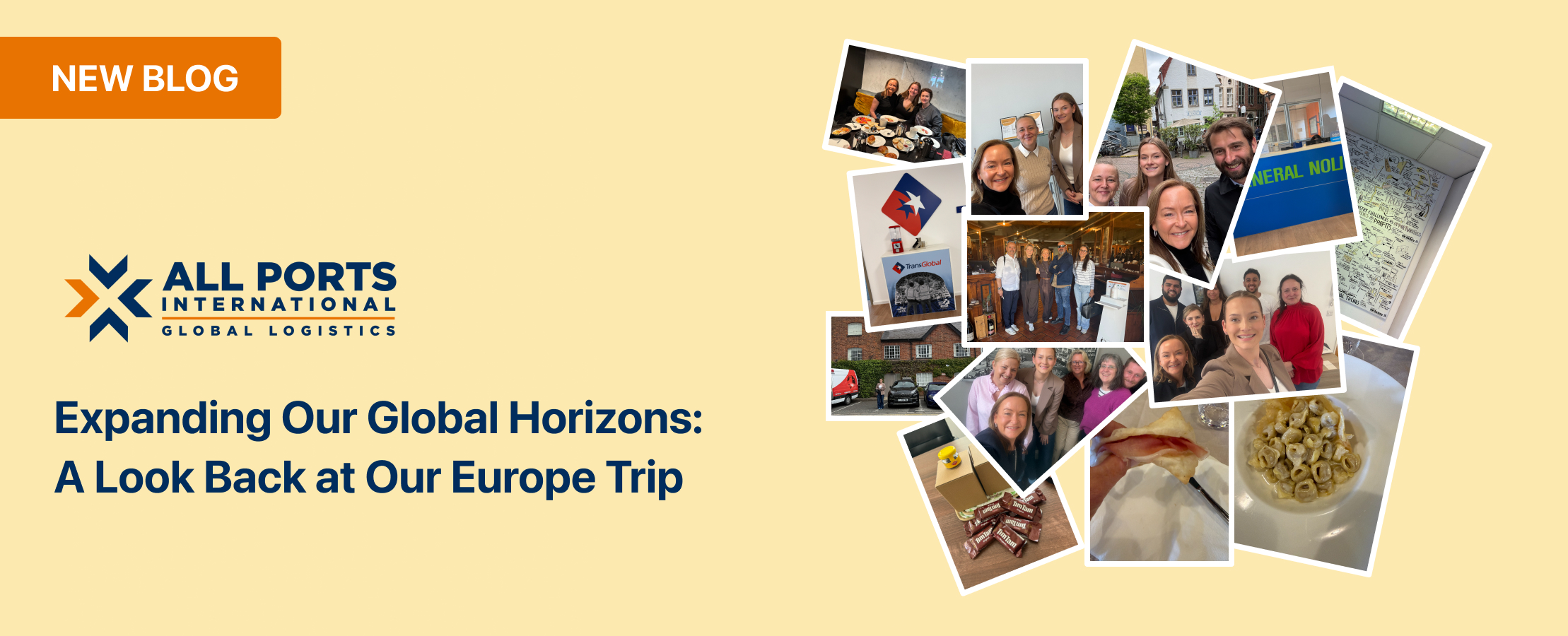
With this commitment in mind, Deanne and Phoebe packed their bags this past May for an intensive, three-week mission across Europe. Travelling across five countries—the UK, The Netherlands, Germany, France, and Italy—they met face-to-face with our strategic alliances, key international agents, and valuable global clients to strengthen the network that keeps your supply chain moving.


Here is a look back at their journey, the connections made, and the insights brought back home to Australia.


First Stop: Cultivating Strong Connections in the United Kingdom 


The mission kicked off in the UK, where the team prioritised strengthening vital agent relationships and deep-diving into client operations.


Strategic Briefings with Baxter Freight: The first portion of the UK visit was spent with our trusted agent, Baxter Freight. In the fast-moving world of global logistics, having a shared philosophy of impeccable service across hemispheres is indispensable. Meeting face-to-face allowed both teams to align operational protocols, ensuring streamlined documentation and efficient customs clearance processes for our Australian importers and exporters.


Sweet Traditions at In Time: Next, Deanne and Phoebe visited In Time, another key agent in our UK network. True to our signature friendliness, the team made sure our northern hemisphere partners didn't go empty-handed. We arrived bearing a quintessential taste of Australia—plenty of Tim Tams and a classic jar of Vegemite! It’s these personal touches that bridge the miles and turn standard business collaborations into long-term, reliable partnerships.


On-Site Insights with Wudu Mate: Rounding out the UK leg, the team visited Wudu Mate, a valued international client. Walking their facility and sitting down with their leadership team provided irreplaceable insights into their exact logistical requirements. By seeing their operations firsthand, our team can continue to tailor precise, end-to-end supply chain solutions that accommodate their growth.


Mainland Europe: Staying at the Forefront of Industry Innovation


Crossing the channel to mainland Europe, the trade mission turned its focus toward high-level freight capabilities and regional logistical trends.


Operational Alignment with QCS: In The Netherlands, Deanne and Phoebe met with the team at QCS (Quick Cargo Service). As our principal Dutch agent, QCS handles complex European distributions. Our discussions focused heavily on trade lane efficiencies and technological coordination—ensuring that our electronic tracking module continues to sync perfectly with European hubs to give our clients total control and real-time visibility over their freight.


The strong personal relationship we share with QCS runs deep—we even had the pleasure of hosting the son of our Netherlands agent, Tom, at our office in Australia recently for a taste of Aussie life!


Heavy-Lift Expertise with Natco: Moving into Germany, the team sat down with our specialist agent, Natco. Renowned for their heavy-lift capabilities and intricate project logistics management, Natco's office proudly showcases their industry accolades, including their TransGlobal heavy-lift project wins. This visit solidified our capacity to manage out-of-gauge, oversized, and highly complex commercial cargo moving out of Central Europe.


France: Global Agent Strategy and a Heartwarming Reunion 


Arriving in France, the trip balanced high-level carrier strategies with the family-first culture that defines All Ports International.


Streamlining Trade Lanes with Balguerie (Paris)

In Paris, the team conducted strategic meetings with Balguerie, our core French agent. With the shifting landscape of international shipping routes, collaborating directly with Balguerie's supply chain experts allows us to secure reliable space allocations and predictable transit times for French goods bound for Oceania.


A Special Parisian Breakfast with Biljana

While business strategies are vital, the absolute highlight of our time in Paris was a beautiful personal connection. We discovered that Biljana, a beloved former All Ports staff member, happened to be in the city at the exact same time! We met up for a wonderful morning breakfast to catch up on life and celebrate her ongoing success. It was a beautiful reminder that once you are a part of the All Ports family, those bonds remain no matter how many years or miles stand between us.


Final Stop: Turning Logistics Challenges into Opportunities in Italy


The final leg of the European trade mission concluded in Italy with our long-standing agent, General Noli.


Interactive Strategies at General Noli

Sitting down in their offices, our collaborative sessions mirrored the forward-thinking, creative spirit outlined on their strategic whiteboards: "Turning industry challenges into opportunities." Together, we mapped out proactive strategies to navigate current global freight disruptions, ensuring our clients receive seamless, uninterrupted service.


World-Class Italian Hospitality

The team at General Noli wrapped up our phenomenal three-week trip with the ultimate display of Italian warmth, hosting an incredible dinner featuring authentic, regional pasta and prosciutto. It was the perfect, celebratory end to an incredibly productive tour.


Bringing Global Expertise Back to You

Travelling regularly to maintain our strategic alliances with over 200 agents across five continents ensures we are never just reacting to the logistics market—we are actively shaping how your cargo is handled.

Because of the face-to-face hours logged by Deanne and Phoebe during May, the All Ports network is tighter, faster, and more robust than ever. We stand ready to tackle the upcoming peak seasons with local, expert hands on the ground at every single point of your cargo's journey.

Looking for an international logistics partner with genuine global reach and a commitment to personal service? Contact our experienced team today to optimise your international trade routes.

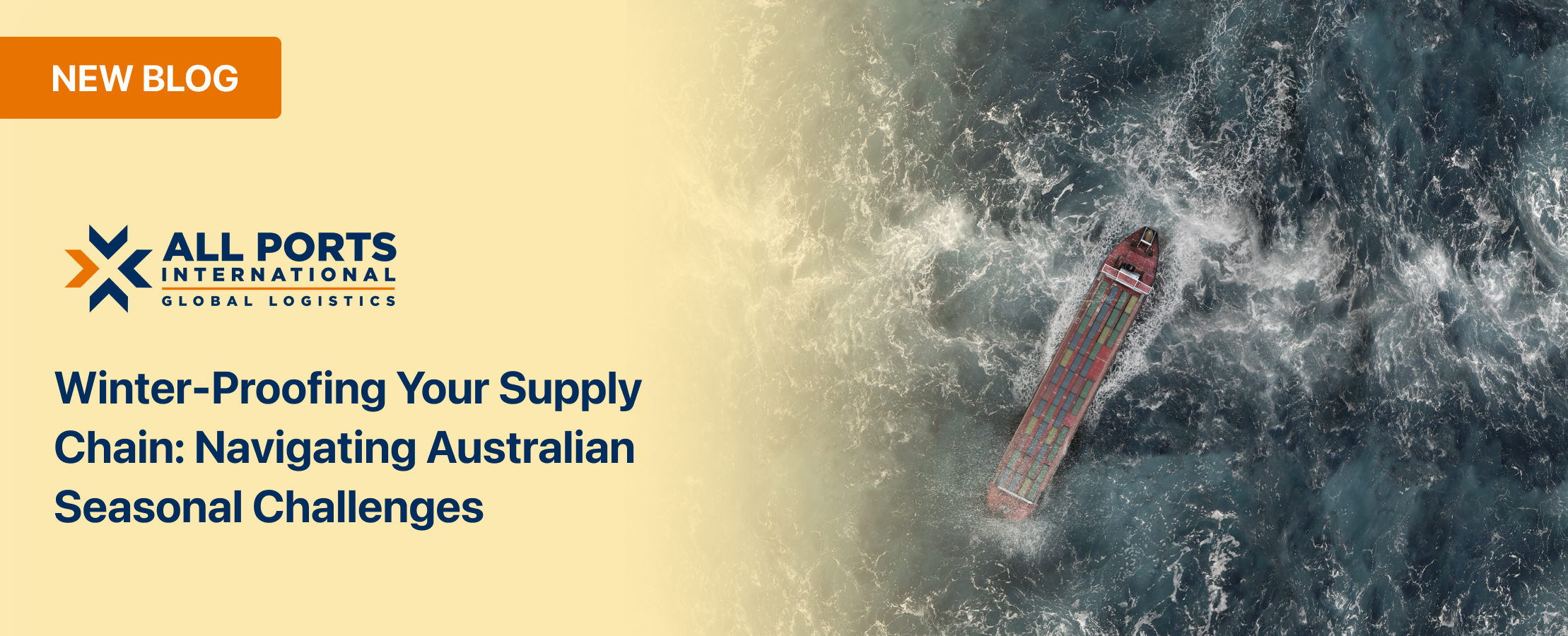
Winter-Proofing Your Supply Chain: Navigating Australian Seasonal Challenges

At All Ports International Logistics, we fully understand how vital it is for your cargoes to arrive on time and in good condition with a minimum of fuss or delay. As we move into the cooler months, the Australian transport landscape faces unique seasonal pressures that can impact even the most well-planned supply chains.

Whether it is heavy fog affecting vessel berthing at Port Botany or wild winter weather impacting road freight across the Nullarbor, being prepared is the key to maintaining a predictable flow of goods.

Identifying Winter Logistics Challenges

The change in season often brings a series of logistical challenges  that can disrupt your operations. During June and July, businesses often encounter:  

  • Vessel Delays: Increased swell and coastal storms can lead to port closures or restricted berthing windows for sea freight.
  • Road and Rail Disruptions: Heavy rain and snow in high-altitude regions can lead to road closures, affecting the final mile delivery of your commercial cargo.
  • Temperature Sensitivity: For certain goods, the drop in ambient temperature during transit requires specialised handling to ensure the cargo remains in peak condition.
  • Increased Demand: As businesses prepare for mid-year sales and the second-half peak, space on major trade lanes can become premium.

How Team API Keeps Your Cargo Moving

What sets All Ports International apart is our ability to be an active partner in your business, providing the experienced professionalism needed to navigate these seasonal shifts. We don’t just book space on ships; we monitor the vessel departure and arrival closely to anticipate delays before they impact your warehouse.  

Our electronic tracking module is a vital tool during the winter months. Activated the moment we receive your order, it provides status updates within 48 hours, giving you the transparency and total control you need to manage your inventory levels effectively.

Experienced Professionalism with a Personal Touch

Navigating winter challenges requires more than just high-tech software; it requires a dedicated team that provides the best possible customer service. Our long term staff are experts at solving challenges caused by third-party providers, ensuring that your cargo remains a priority regardless of the weather.  

By leveraging our network of over 200 worldwide agents, we can coordinate alternative routes or modes of transport when primary lanes are affected by seasonal disruptions. We take control of your freight needs so you can focus on what you do best, providing a seamless transition from the supplier to your door.

Is Your Supply Chain Ready for the Winter Chill? 

Contact the team at All Ports International today to discuss how we can winter-proof your logistics and keep your business moving forward.

The Importance in Logistics of a Vetted Global Agent Network

In the complex world of International Logistics, the success of your shipment often depends on a chain of relationships that spans the globe.

While the services provided by All Ports International in Australia—such as Customs Brokerage and on-carriage—are critical, the initial movement of your goods, known as pre-carriage, is handled by agents thousands of miles away.

If you rely on a large, faceless logistics platform, you risk handing control to an unknown, unvetted provider at the critical point of origin.

At All Ports International, we focus on people. Our long term staff actively nurtures a trusted, global agent network, turning foreign logistics into a reliable extension of our own exceptional customer service.

In freight forwarding, trust between agents is your ultimate competitive advantage.

Our involvement in international networking events, like last year's Freightcamp in Bangkok, isn't just for socialising—it’s how we build the crucial trust needed to protect your cargo.

1. Local Expertise

A strong, vetted global network provides us with dedicated agents who have local expertise in foreign markets. This local knowledge is crucial for navigating specific customs, local regulations, and managing supplier issues (pre-carriage) in the country of origin.

2. Clear Communication and Reliability

Established agent partnerships mean clear communication and dedicated attention to your cargo. Unlike dealing with an impersonal regional office, our agent partners treat your cargo with the same level of friendliness and care we provide.

3. Problem-Solving Power

When unexpected issues arise overseas—a sudden customs delay, a last-minute cancellation by a local trucking firm, or a "spot fire caused by a 3rd party service provider"—our established partner is on the ground to solve it immediately.

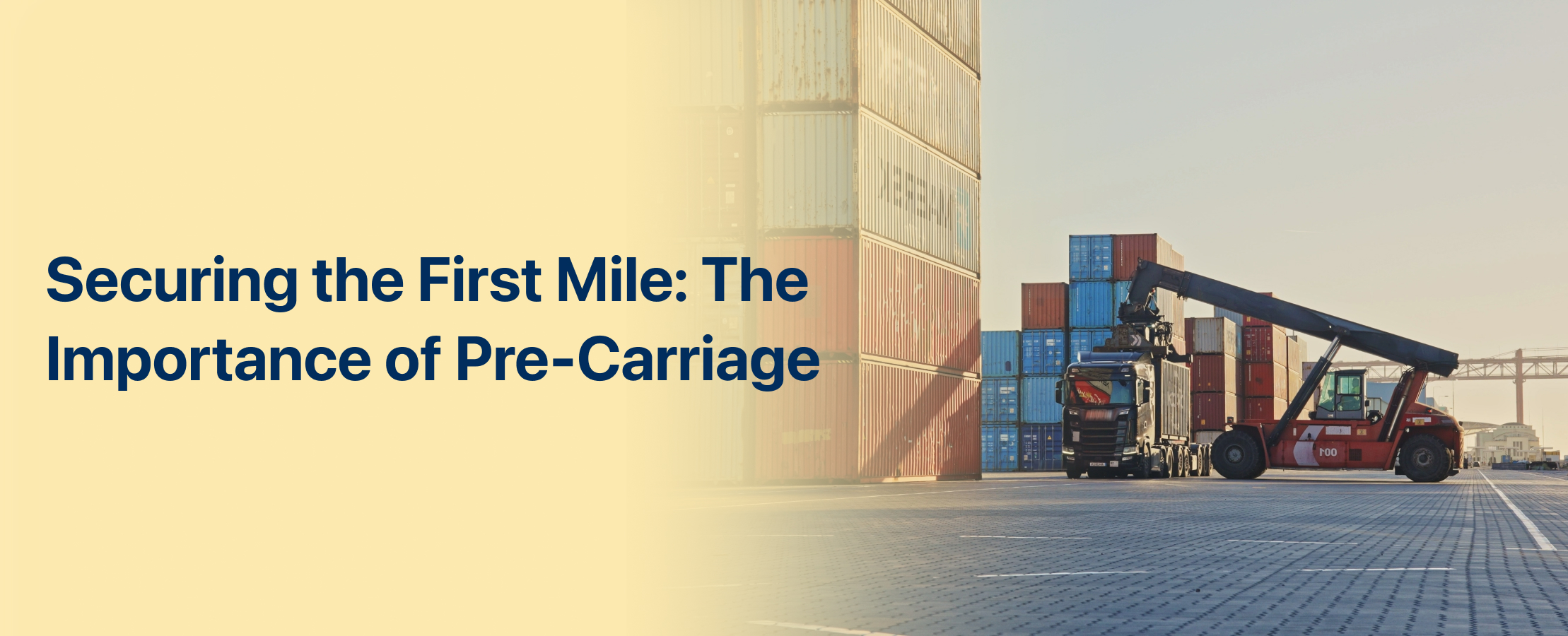
The pre-carriage stage—the movement of goods from the supplier's door to the port of loading—is where the first significant delays can occur.

When you don't control the pre-carriage, you rely on the supplier's potentially unvetted, cheapest logistics provider. This often leads to:

  • Missed Cut-Offs: The local truck is late, and your container misses the vessel cut-off time, causing the container to be rolled.
  • Documentation Errors: Incorrectly handled local documentation causes issues before the container even leaves the country.

Relying on our established overseas agent ensures that local trucking is reliable, documentation is handled correctly, and your cargo meets the vessel cut-off times.

This mitigates risks early in the supply chain and ensures your shipment leaves on the vessel it was booked on.

We may be based in Australia, but our commitment to a seamless logistics experience is global.

By leveraging the trust and expertise of our vetted agent network—the fruits of active relationship building—we ensure that your cargo is handled with reliability, expertise, and friendliness from the moment it leaves the factory floor.

Choose a partner whose network works as hard as they do. Contact All Ports International today to discuss your global logistics needs.

HS Code Health Check: Preventing Costly Audit Triggers in Q2

As we move past the chaos of Q1 and the Lunar New Year recovery, April is the perfect time for businesses to conduct a thorough compliance review.

Your Harmonised System (HS) code—the numerical classification assigned to your product—is arguably the single most important piece of data on your import declaration.

An incorrect HS code doesn't just lead to incorrect duty payments; it acts as a red flag, potentially triggering a costly customs audit in the middle of the year.

At All Ports International, our Customs Brokerage expertise is your best defense, ensuring your classification is accurate and your compliance is secure.

Many importers set their HS codes when they first source a product and never look back. However, relying on old classifications exposes your business to unnecessary risk:

  • Product Evolution: Have you made any small changes to your product since the start of the year? Even minor modifications—such as changing a component material, assembly process, or packaging—can shift the HS code classification, potentially changing the applicable duty rate.
  • Regulatory Updates: Global trade regulations and tariff schedules are periodically updated by bodies like the World Customs Organisation (WCO). Your HS code might not have changed, but its specific interpretation or applicable duty rate might have.
  • The Underpayment Trap: If you underpay duty because of an incorrect HS code, Customs will not only collect the underpaid revenue but will likely impose financial penalties. This often leads to a full audit of your past import records.
  • Audit Focus: Customs authorities typically target areas where classifications are subjective or prone to error. Proactively validating your HS codes in Q2 minimises your risk of being flagged later in the year.

Our Customs Brokerage team can partner with you to conduct a mid-year HS Code Health Check, mitigating these risks:

1. Detailed Product Analysis

We go beyond the commercial invoice. We analyse the product's function, composition, and intended use. For complex products, determining the correct HS code often requires specialised knowledge, especially when multiple materials are involved. This ensures the classification accurately reflects the goods being imported.

2. Cross-Referencing Tariff Concessions

An incorrect classification may cause you to miss out on a valid Tariff Concession Order (TCO), or conversely, improperly claim one. We verify that the HS code used aligns with all available concessional duty rates, helping you maximise legal savings while maintaining compliance.

3. Documentation Alignment

The HS code must align with all supporting documentation, including Certificates of Origin (COO) and Valuation Statements. Our check ensures there are no conflicting data points that could raise a red flag during a Customs review.

Customs compliance is a continuous process, not a one-time event. An incorrect HS code is not merely a documentation error; it’s a direct financial risk.

By leveraging the skills and expertise of our Customs Brokerage team, you gain a partner who takes the lead in ensuring your classifications are correct and current.

We provide the diligent oversight needed to prevent minor classification issues from escalating into major financial burdens, allowing you to proceed through Q2 with confidence.

Don't wait for the audit letter. Contact All Ports International today for your Q2 HS Code Health Check.

Inland Freight Solutions: Connecting the Dots Between Port and Warehouse

The journey of your imported cargo doesn't end when the ship docks. In fact, what happens after the vessel arrives—the inland movement from the wharf to your warehouse—is often the most critical and complex part of the process, commonly known as the "final mile" (or the first mile, if you are exporting).

At All Ports International, we understand that seamless International Logistics requires expert management of every link, especially the road and rail connections known as pre-carriage and on-carriage.

Once your container is discharged from the vessel, it enters a critical phase where costs and risks can escalate rapidly if coordination fails:

  • Port Congestion and Demurrage: Delays in organising transport mean your container sits at the wharf, quickly incurring demurrage (charges levied by the shipping line for extended use of the container) and storage fees (charges levied by the terminal). These fees can turn a profitable shipment into a loss-maker.
  • Trucking Shortages: During peak season or times of high port congestion, securing a truck and a slot for pickup can be a major challenge. Relying on an outside, unvetted provider often leads to last-minute cancellations and missed deadlines.

Third Party Service Providers: The most common challenge we solve is when a 3rd party service provider—a trucking company, an external depot, or a rail operator—fails to execute their task.

Our core strength lies in managing your entire shipment journey, from booking space on ships to coordinating delivery to your door. We ensure the transition between sea and land is flawless.

1. Expert Coordination: Managing Pre-Carriage

Pre-carriage refers to the transport of export cargo from your warehouse to the terminal at the port of loading.

We manage the scheduling and booking of the container and truck to your facility. Our process ensures the cargo is delivered to the wharf in time to meet the vessel's cut-off, preventing costly roll-overs to the next available sailing.

2. Proactive Control: Mastering On-Carriage

On-carriage is the movement of import cargo from the destination port to your final warehouse. This is where most errors occur.

  • Timing and Monitoring: We prioritise clear communication and proactive monitoring. Our team tracks the vessel's arrival, coordinates with customs to ensure swift clearance (avoiding costly delays), and pre-books the trucking slot needed to avoid terminal congestion.
  • Vetted Networks: We rely on established networks of trusted road and rail partners. This control prevents the unpredictable issues that arise from using unreliable third-party providers.

By integrating the inland journey seamlessly with the international voyage, we ensure a smooth transition from the wharf to your destination, saving clients time and preventing delays.

You shouldn't have to worry about whether a last-mile trucking company will show up. That's our job. Our long term staff and commitment to customer service mean we maintain control over every step. We remove the burden of coordinating multiple providers, allowing you to focus on your business with the peace of mind that comes from a completely managed supply chain.

Ready to steamline your final mile logistics? Partner with All Ports International for expert, end-to-end service.

Contact us today to streamline your pre- and on-carriage solutions.

Cargo Insurance: Your Safety Net Against the Unexpected Risks of International Shipping

In the complex world of International Logistics, many importers overlook one of the most critical aspects of risk management: comprehensive cargo insurance. The assumption is often, "The carrier is liable, so my goods are covered." This is a common and potentially devastating mistake.

Relying solely on a carrier's legal liability is not enough to protect your financial investment. At All Ports International, we highlight this often-overlooked area to ensure you have a complete safety net, preventing potential losses.

Carrier’s Legal Liability is the baseline level of accountability that carriers adhere to for goods in their care, custody, and control. It is not insurance and comes with two severe limitations:

  • Limited Compensation: Compensation is often capped at a low maximum amount per package or per kilogram of cargo, not the full commercial value of your goods. For ocean carriers, this limit is often as low as $500 per customary shipping unit. If your container holds $100,000 worth of electronics, a $500 reimbursement doesn't even cover the freight cost.
  • Burden of Proof: To claim, you must prove that the carrier's negligence caused the loss. Carrier liability does not cover losses due to events outside of their control, such as natural disasters, acts of war, or even a sudden "act of God".

Cargo Insurance, by contrast, provides a broader, more comprehensive safety net that protects the actual value of the goods, regardless of who is at fault.

The two most common types of cargo insurance coverage determine the level of protection you receive:


Coverage Type Description What It Covers Who Should Use It
Named Perils (Institute Cargo Clauses B or C) Less Comprehensive. Only covers losses specifically listed in the policy. Typically covers perils of the sea, like sinking, fire, collision, total loss, or stranding. Often used for low-value or bulk cargo.
All-Risk (Institute Cargo Clauses A) Most Comprehensive. Provides the broadest protection, covering all causes of loss or damage unless specifically excluded in the policy. Covers fire, theft, water damage, handling errors, natural disasters, and more. Highly recommended for high-value or finished goods.

A critical, often-insured risk is General Average. If a disaster occurs and cargo must be voluntarily sacrificed to save the ship and remaining cargo, all cargo owners must contribute to the loss. Cargo insurance will cover this contribution, securing the release of your goods.

The cost of your cargo insurance premium is determined by a thorough risk assessment. The key factors include:

  • Value and Nature of Cargo: High-value, fragile, or perishable goods (like electronics or pharmaceuticals) attract higher premiums due to increased risk of theft, damage, or spoilage.
  • Mode and Route: Sea freight is generally considered the riskiest mode. Routes passing through piracy-prone waters or areas with political instability will incur higher premiums.
  • Claim History: A history of frequent claims will generally lead to higher rates.
  • Level of Coverage: Opting for the comprehensive "All-Risk" coverage will naturally cost more than a limited "Total Loss Only" policy.

Navigating the various coverage options, policy terms, and cost factors can be overwhelming. This is where the expertise of All Ports International shines. Our dedicated long term staff ensures you don't just secure coverage—you secure the right coverage. We provide the essential guidance needed to protect your financial interests, guaranteeing peace of mind from the point of origin to the final destination.

Don't let the unexpected be the costliest part of your business. Let our team assess your specific cargo risks and tailor a policy that fully protects your investment.

Contact All Ports International today to discuss your cargo insurance needs.

Post-Lunar New Year Pitfalls: Managing the Backlog, Quality Control, and Worker Return

The Lunar New Year (Lunar New Year) shutdown is well-known, but many importers mistakenly believe the logistics challenges end when the holiday does. In reality, the weeks following the official break are often the most precarious, marked by a slow return to full capacity, severe backlogs, and an elevated risk of compromised quality.

At All Ports International, our service doesn't stop when the factories reopen. Our proactive International Logistics and Customs Brokerage teams are focused on navigating these post-Lunar New Year pitfalls to secure your inventory and keep your supply chain running smoothly.

When the celebrations end, manufacturing doesn't simply flip a switch back to full speed. The post-Lunar New Year recovery is a gradual, staggered process that can last for weeks.

  • The Delayed Return of Workers: While the official public holiday is brief, many workers take extended leave. Up to a third of the workforce may not return immediately, either extending their vacation or choosing to switch jobs.
  • The Labor Gap: Factories must manage with a reduced crew or hire and train new, less-experienced workers. This labor shortage means that production levels often take a month or more to return to normal capacity.
  • The Backlog Bottleneck: During the shutdown, backorders pile up. When the factory reopens at reduced capacity, they must immediately contend with weeks of accumulated orders, resulting in delays for any new or post-holiday orders. This backlog can lead to slower processing times that impact your delivery timeline well into Q2.

The pressure to clear the backlog and ship overdue orders creates a high-risk environment for product quality.

  • Rushed Production: Factories often rush to catch up, which can lead to workers taking "shortcuts" and an increased risk of product defects.
  • New Staff, New Errors: Production lines running with newly hired and less-skilled temporary or permanent staff during the initial ramp-up period are more susceptible to quality inconsistencies.
  • Mitigation Strategy: It's critical to factor in time for increased Quality Control (QC) checks for any shipments completed immediately before or after the holiday to ensure products meet your standards.

Our job is to provide you with the transparency and agility needed to manage this volatile period, turning potential "spot fires" into seamless logistics.

  • Proactive Monitoring & Communication: We continue to monitor your shipments, providing clear communications and accurate updates during the slow factory recovery period, so you're not left in the dark.
  • Port Congestion Management: The rush to ship post-Lunar New Year creates port congestion and container imbalance. We use our expertise to navigate these delays and prioritise your cargo's movement from the congested Asia-Pacific ports.
  • Customs Preparation: Our Customs Brokerage team works to ensure all necessary documentation is ready before the goods are completed. This allows your shipment to move through customs quickly and smoothly once it finally departs, minimising further delays on the destination end.

The challenges of the Lunar New Year do not end when the factories' doors open; they simply shift from a standstill to a crawl. By partnering with All Ports International, you leverage a dedicated team that provides the foresight and flexibility needed to efficiently manage the backlog, mitigate quality risks, and secure your inventory during the crucial post-Lunar New Year recovery period. Reach out to our team today!